
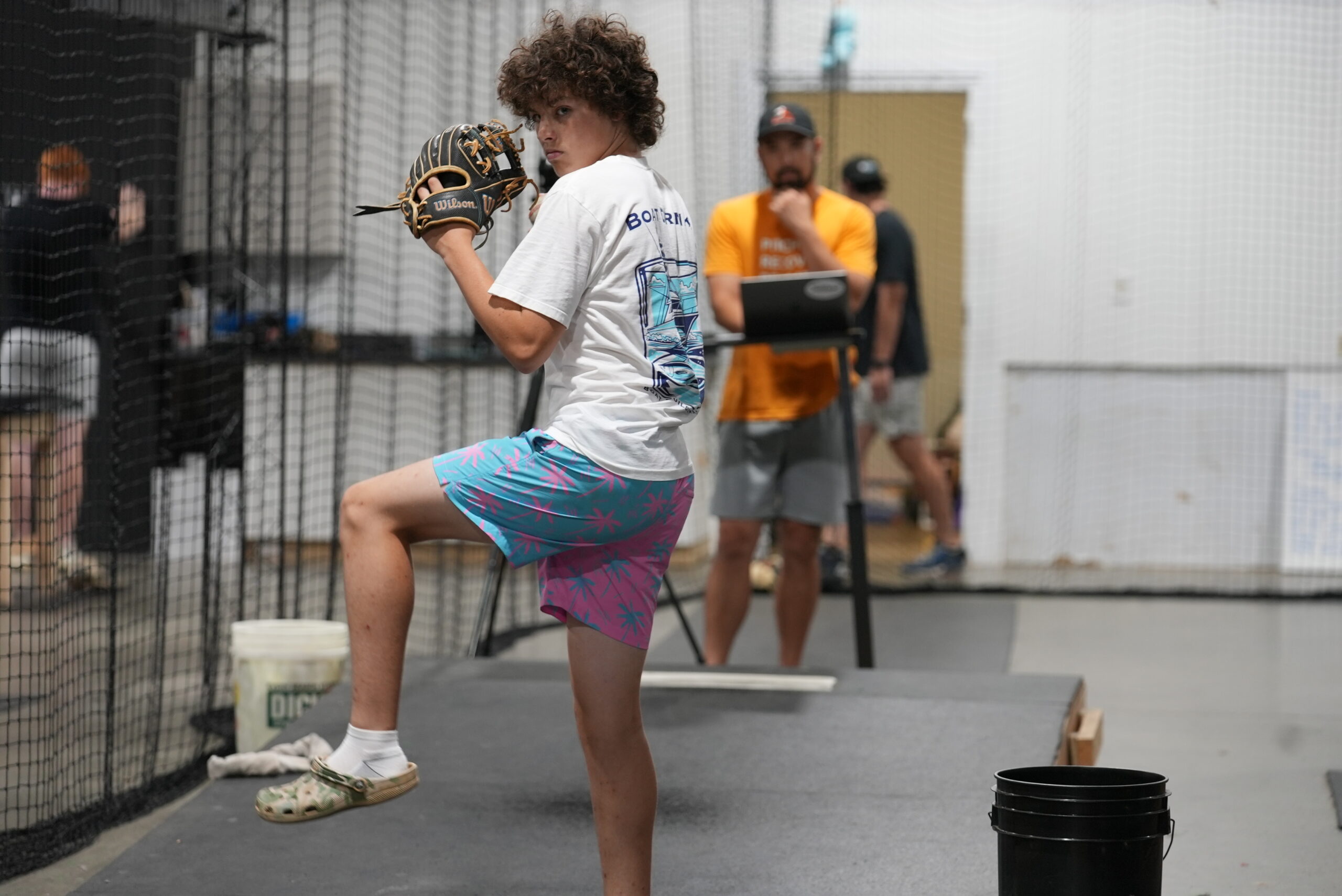
 Pain isn’t a normal part of pitching—it’s a warning sign. While occasional soreness may seem like part of the game, persistent discomfort or injury often points to deeper issues rooted in your baseball pitch mechanics. What may feel like bad luck is often the result of subtle breakdowns that place excessive strain on the shoulder or elbow.
At BYoung Physical Therapy, we help pitchers identify these mechanical faults and correct them before they lead to injury. Clean, efficient mechanics not only protect your arm—they also unlock better velocity, command, and consistency on the mound. In this post, we’re breaking down five of the most common flaws in baseball pitch mechanics—and how to fix them before they become long-term problems.
Early Trunk Rotation
Early trunk rotation happens when the torso begins turning before the front foot has fully planted. This disrupts the natural flow of energy from the lower body through the core to the arm, reducing velocity and forcing the arm to “catch up” on its own. When this happens, the shoulder and elbow take on more stress than they should, increasing the risk of injury. Research has shown that pitchers who rotate their trunk early are significantly more likely to suffer shoulder or elbow injuries requiring surgery.
Correcting early trunk rotation starts with focusing on proper sequencing—letting the hips lead while the shoulders follow. Drills like medicine ball throws and hip-shoulder separation exercises help reinforce this timing and build the coordination needed for efficient movement. For best results, working with a knowledgeable coach or movement specialist can identify subtle timing issues and guide pitchers toward safer, more powerful baseball pitch mechanics.
“Flying Open” with the Glove Side
“Flying open” with the glove side occurs when the glove arm pulls open too early—often toward the third-base side for right-handed pitchers—yanking the chest along with it. This premature movement disrupts proper alignment and timing, which can throw off a pitcher’s control and consistency.
When the glove side flies open, it also increases torque on the shoulder and elbow, placing additional stress on these joints and raising injury risk. To address this, pitchers should focus on keeping the glove arm stable and pointed toward the target throughout the rotation. Drills like strong glove and working in front of a mirror can help reinforce better glove-side positioning and improve overall baseball pitch mechanics.
Inconsistent Arm Slot
An inconsistent arm slot occurs when a pitcher changes their arm angle either from pitch to pitch or during the delivery, often dropping the elbow or creating a “push” motion. This inconsistency causes instability in the throwing motion, making it difficult to replicate the same mechanics consistently. Unintentional variations like these not only reduce control and accuracy but also place extra stress on joints and tissues, increasing the risk of injury.
To fix this, pitchers should focus on maintaining a consistent release point with a comfortable and natural arm slot. Using video analysis can be especially helpful in identifying subtle inconsistencies and making necessary adjustments.
Lack of Hip-to-Shoulder Separation
Lack of hip-to-shoulder separation happens when the hips and torso rotate simultaneously instead of creating a slight delay between the two. This timing error limits the rotational power generated during the throw.
Without that separation, more of the work falls on the arm to produce velocity, increasing stress on the shoulder and elbow. To improve, pitchers should train rotational sequencing using resisted band drills and core-focused medicine ball exercises. The goal is to create a “stretch” or separation between the hips and shoulders for maximum power and efficiency.
Poor Follow-Through
Poor follow-through occurs when a pitcher finishes the pitch abruptly or with a “cut off” motion instead of allowing the arm to decelerate naturally. This rushed finish doesn’t give the arm enough time or space to slow down safely.
As a result, it increases stress on the shoulder and elbow, raising the risk of injury. To fix this, pitchers should focus on a smooth, controlled follow-through that finishes in an athletic fielding position. Incorporating long toss and plyometric drills can help develop better arm deceleration and overall baseball pitch mechanics.
Supporting Safer, Smarter Pitching Mechanics
Every throw is a full-body movement—and small breakdowns in that chain can add up quickly. The good news is that these mechanical flaws are often correctable with the right guidance and focused training. Whether you’re rehabbing an injury or working to prevent one, understanding and addressing these hidden risks is key to keeping your arm healthy and your performance strong. Clean baseball pitch mechanics don’t just make you a better pitcher—they keep you healthy. If you’re dealing with arm pain or want to assess your delivery, contact us to schedule an appointment today.