
Tommy John Recovery: A Strategic Path Back to the Mound

The ulnar collateral ligament (UCL) is the primary stabilizer of the medial elbow, particularly during the high-velocity torque of a baseball pitch. When this ligament fails, the path back to the field—Tommy John surgery (UCL reconstruction)—is a meticulous journey.

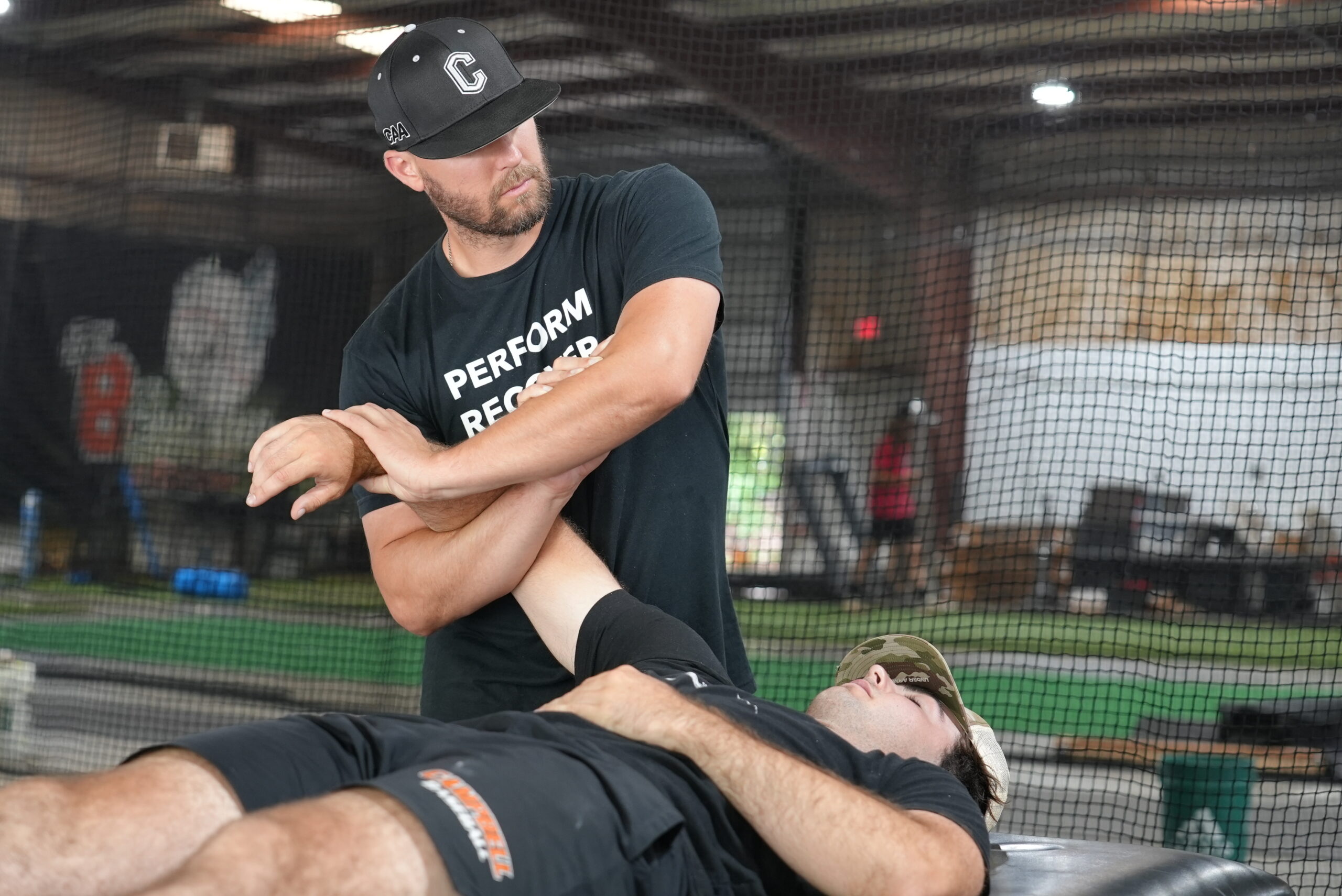
At BYoung Physical Therapy, we don’t just guide you through a list of exercises; we manage the biological and biomechanical reconstruction of your throwing motion. Our physical therapists are specifically trained to evaluate and correct throwing mechanics to reduce stress on the arm and elbow. This specialized, one-on-one care provides the framework for a successful Tommy John recovery, strategically turning a tendon transfer into a high-performance ligament.
Tommy John Recovery

Understanding the Procedure: The Biological “Why”

Tommy John surgery is a tendon transfer procedure. A graft—typically harvested from the forearm, hamstring, or a donor—is threaded through holes drilled into the arm bones to create a new stabilizer. Because no muscles are cut during the surgery, the initial stages of Tommy John recovery can feel deceptively fast. However, your body requires significant time to establish a blood supply to the new tissue.

The focus of our rehabilitation program is to provide gradually increasing stresses on the transferred material. This allows the tendon to adapt its cellular structure and assume the role of a ligament, a process that takes a full year to complete.

The Kinetic Chain: More Than Just an Elbow

A common mistake in rehab is focusing solely on the elbow. That’s why we analyze the scapulothoracic and glenohumeral joints alongside elbow function. During Tommy John recovery, athletes often develop compensatory dysfunction—they protect the elbow by overusing the shoulder or losing trunk rotation. Our program integrates total body conditioning to ensure that when you return to the mound, your legs and core are providing the power, so your elbow doesn’t have to.

Strategic Recovery Timeline

A successful return to sport typically spans 9 to 12 months. We focus on the entire kinetic chain, ensuring that the shoulder girdle and core are ready to support the elbow once throwing resumes.

The initial goal is to strictly protect the maturing graft while preventing muscle atrophy in the surrounding structures. During the first week of Tommy John recovery, the arm is secured in a splint, and all medial joint tension (forces that pull on the inside of the elbow) must be avoided to ensure the integrity of the surgical repair. To maintain healthy blood flow and neural input without compromising the elbow, we initiate active range of motion for the wrist, fingers, and shoulder.

Between weeks one and four, you will transition out of the splint and focus on gradually regaining full elbow range of motion. Once the incision is fully closed, we begin a total body conditioning program, allowing you to maintain your athletic baseline and metabolic fitness while the elbow continues to heal.

By the second month, the focus shifts toward restoring the structural foundation of the arm. Our objective for Tommy John recovery is for the athlete to achieve a full, pain-free range of motion across the elbow, wrist, forearm, and shoulder joints. One month post-operation, we begin introducing light weights for resistive elbow and forearm exercises, specifically targeting elbow flexion, extension, and forearm rotation.

As you progress into months two and three, we intensify active resistive exercises for the entire upper extremity, with a heavy emphasis on the rotator cuff and scapular stabilizers. Throughout this phase, we maintain a rigorous lower body and trunk conditioning program, ensuring your foundational strength and stability remain high while the graft continues to stabilize.

Throwing is a strategic buildup, not a test of the elbow. We begin with easy tossing (no wind-up) at 20–30 feet and progressively increase distance and volume. This should be performed three to four times per week with post-session icing to manage the inflammatory response.

Between months five and seven, we systematically increase long-toss distances up to 150 feet, which applies controlled tension to the graft to improve its elasticity. By month eight, we transition to the mound at partial speed, focusing intensely on proper body mechanics—staying on top of the ball and keeping the elbow elevated—to ensure the shoulder and trunk are absorbing the force rather than the medial elbow.

The final stage of rehabilitation bridges the gap between clinical recovery and competitive performance. To prepare for game intensity, we use “Up/Down” simulations. This involves pitching, resting (simulating an inning break), and pitching again to build the specific endurance required for competitive play.

During these simulations, you’ll throw a set number of pitches (the “up”), then sit and rest for 8–10 minutes (the “down”), mimicking an inning break. This teaches the reconstructed UCL and surrounding musculature to maintain mechanical integrity even after cooling down in the dugout. While the goal is to begin the transition toward competitive play by the end of the first year of Tommy John recovery, final clearance is always criteria-based, ensuring you have met every mechanical and strength benchmark required for safety.

Your Return to the Mound Starts Here

Tommy John recovery is a marathon, not a sprint. It is a highly technical process that requires more than just hitting your reps—it requires a deep understanding of how the elbow interacts with the rest of your body.

At BYoung Physical Therapy, our goal isn’t just to get you back to your pre-injury state; it’s to build a more resilient, mechanically sound athlete. By combining evidence-based clinical protocols with a sophisticated understanding of the pitcher’s mindset, we ensure that every phase of your rehab is strategic and focused on long-term health.

Don’t leave your recovery to chance—trust the experts who understand the mechanics of the game and the science of the graft. Contact us to learn how we can help you map out a strategic Tommy John recovery plan.
Tommy John Recovery

Success Stories