
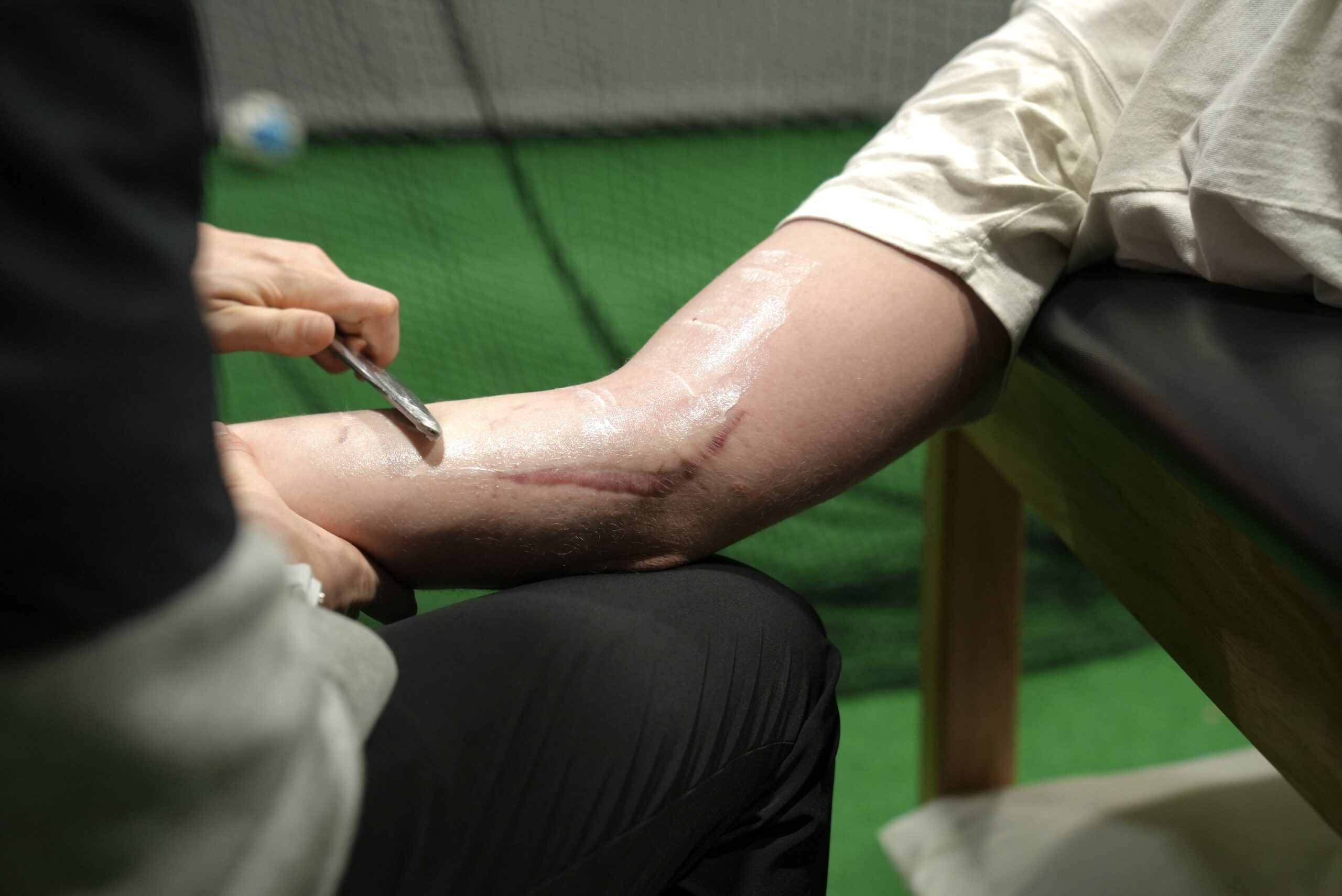
 For a baseball player, the diagnosis of a torn ulnar collateral ligament (UCL) is a significant crossroads. However, with modern surgical techniques and a structured, biomechanically-sound rehabilitation plan, the road back to the mound is well-defined.
At BYoung Physical Therapy, we specialize in upper extremity injuries and throwing mechanics, ensuring that recovering from Tommy John surgery is not just about healing a ligament, but about building a more resilient athlete.
Phase I & II: Protection and Controlled Mobilization (Weeks 0–6)
The initial weeks following UCL reconstruction focus on protecting the graft while mitigating the effects of immobilization. During this window, we utilize a posterior splint or a hinged elbow brace to control the range of motion (ROM).
While the elbow is protected, we begin immediate non-valgus loading. This includes:
- Wrist and Hand Isometrics: maintaining forearm muscle density without stressing the elbow joint
- Scapular Positioning: ensuring the foundation of the throwing shoulder remains active
- Grip Strengthening: crucial for maintaining the neural drive to the forearm flexors, which will eventually act as dynamic stabilizers for the new ligament
Phase III: Restoring Joint Mechanics (Weeks 6–12)
Once the initial healing phase is complete, our focus shifts to restoring full active and passive range of motion. Recovering from Tommy John surgery requires a delicate balance; we must regain extension and flexion without introducing premature valgus stress—the opening force on the inside of the elbow.
In this phase, we transition from isometrics to active resistive exercises. We emphasize the flexor-pronator mass—the group of muscles on the inside of your forearm. These muscles are your primary defenders against future injury, as they help offload the stress placed on the UCL during a pitch.
Phase IV: The Strengthening and Functional Foundation (Months 3–6)
At the three-month mark, the graft is maturing, allowing us to increase the intensity of the workload. This is where we integrate total body conditioning and advanced rotator cuff stabilization.
A critical component of recovering from Tommy John surgery is analyzing the kinetic chain. We look at your hip mobility and core stability. If your lower body isn’t generating power efficiently, your elbow will be forced to overcompensate, putting the new graft at risk. Toward the end of this phase, patients may begin a light toss program—often starting with a nerf ball or light tossing at 30 feet—to reintroduce the arm to the throwing motion in a highly controlled environment.
Phase V & VI: Return to Performance (Months 7–12+)
The final stages of recovering from Tommy John surgery are the most strategic. We progress through a tiered throwing program:
- Long Toss: gradually increasing distance to build endurance
- In-and-Out Drills: varying distances to recalibrate how your brain and body coordinate the arm in space
- Mound Progression: moving from level-surface throwing to partial-speed bullpen sessions on the incline
Throughout this process, we utilize video analysis to ensure your mechanics are optimized. We aren’t just looking for you to throw; we are looking for you to throw with a sequence that protects your elbow and maximizes your efficiency.
Why Your Rehab Partner Matters
Recovering from Tommy John surgery is a marathon, not a sprint. It requires a partner who understands the specific demands of the late cocking and acceleration phases of the pitching delivery. At BYoung Physical Therapy, we provide the specialized, one-on-one care needed to navigate this 12-month journey successfully.
If you are recovering from Tommy John surgery and want to ensure your return to the mound is safe, strategic, and successful, don’t wait. Our team of Doctors of Physical Therapy is here to guide you through every phase of the process. Contact us today to schedule your consultation and take the first step toward your return to play.