
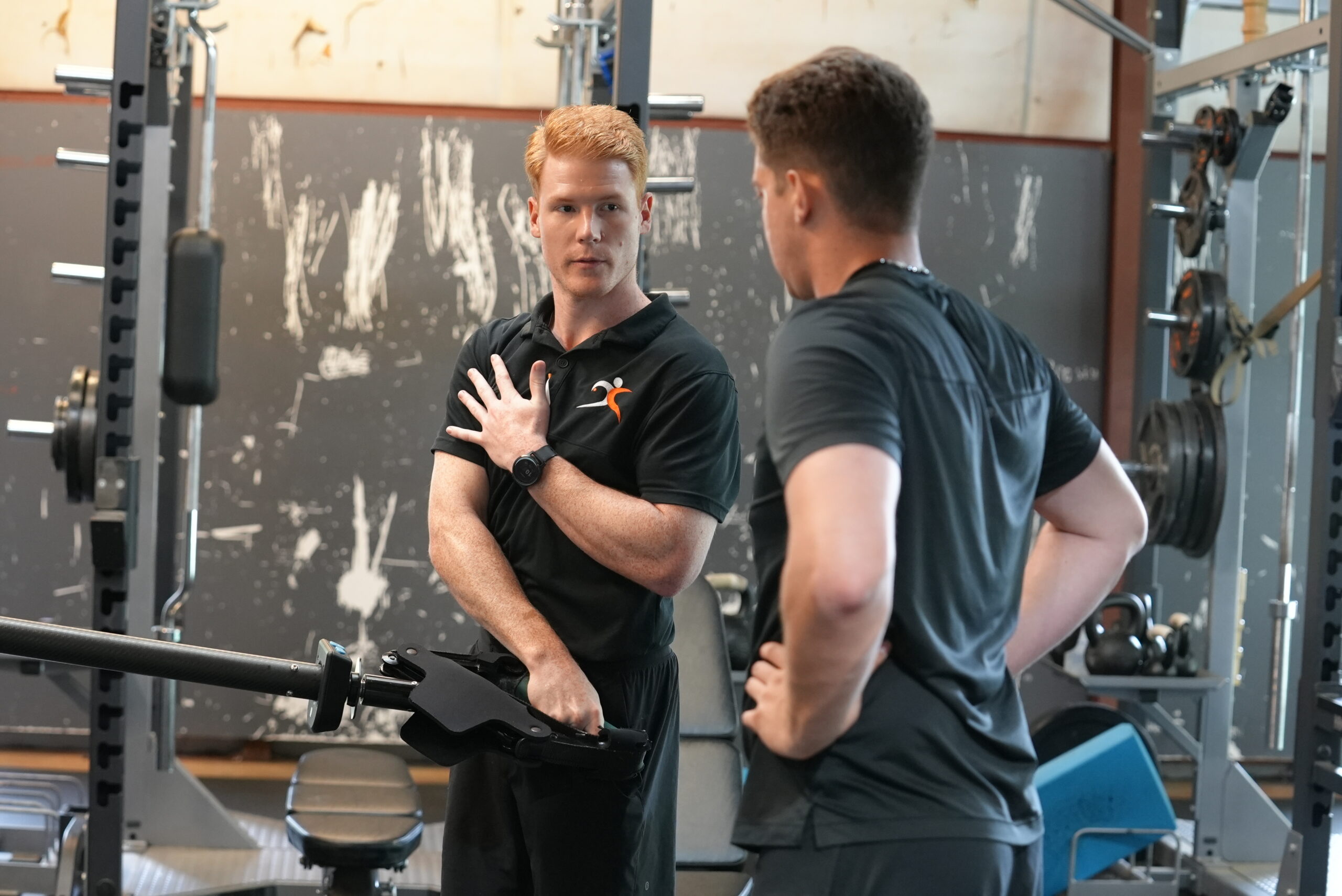
 Shoulder pain is one of the most common issues we see in physical therapy. The shoulder is an incredibly mobile joint, allowing you to reach, lift, throw, and perform countless daily and athletic movements. But that same mobility makes it vulnerable to injury, overuse, and wear-and-tear over time.
Fortunately, many shoulder problems can be prevented—or at least managed effectively—before they require surgery. With the right combination of shoulder PT exercises—such as strengthening and mobility work—you can keep your shoulders strong, stable, and pain-free.
Understanding the Shoulder
The shoulder is a ball-and-socket joint supported by the rotator cuff and scapular stabilizers. Unlike joints like the elbow or knee, the shoulder moves in multiple directions, which makes it both versatile and complex.
Without proper strength and stability, the shoulder is more prone to injuries such as:
- Rotator cuff tears
- Impingement
- Labral injuries
- Chronic pain and inflammation
Shoulder PT exercises can help address these risks by improving mobility and retraining movement patterns before small issues become major problems.
Key Strengthening Shoulder PT Exercises
These shoulder PT exercises target the muscles that stabilize and protect your shoulder joint. Many can be done with a light resistance band or small weights. Be sure to perform each movement with control, and stop if you experience pain.
External Rotation with Band
Attach your resistance band to a doorknob (or another object at chest height). Gripping the other side of the band with the arm farthest from the door, bend your elbow by your side at 90 degrees. Rotate your forearm outward while keeping your elbow close to your body. Slowly return to start. This strengthens the rotator cuff and improves shoulder stability.
Internal Rotation with Band
Attach your resistance band to a doorknob (or another object at chest height). Gripping the other side of the band with the arm closest to the door, bend your elbow by your side at 90 degrees. Rotate your forearm inward and reach across your stomach, then slowly return back to the starting position. Balanced internal and external rotation helps prevent imbalances that can lead to injury.
Rows with Band
Attach your resistance band to a doorknob (or another object at chest height). Facing the doorknob, hold the band in each hand and stretch your arms in front of you with palms facing each other. Pull backward, keeping your elbows close to your sides. This targets the scapular stabilizers and encourages proper posture.
Scaption (V-Lifts with Light Weights)
Lift arms in a “V” shape at a slight angle from the body, thumbs pointing up. This engages the rotator cuff without impingement. If you’d like to add weight, start with a soup can in each hand, then gradually increase the weight as your tolerance increases.
Shoulder I’s, T’s, and W’s
Lying on your stomach or with light resistance bands, move your arms to form an “I” with palms facing each, a “T” with palms facing forward, and a “W,” also with palms facing forward. Hold each position briefly to strengthen postural muscles that protect the shoulder.
Mobility & Stretching
Strength alone isn’t enough—mobility is key to healthy shoulders. Aim to stretch tight muscles regularly to maintain full range of motion:
- Posterior Shoulder Stretch: Bring your arm across your chest and gently pull the arm towards your chest with your opposite hand.
- Doorway Stretch (Anterior Stretch): Stand in an open doorway with your feet shoulder-width apart and one foot slightly forward for stability. Place your forearms and hands on the door frame at shoulder height with elbows bent at 90°. Gently lean your body forward until you feel a stretch across the front of your shoulders and chest. Hold for 10–15 seconds, then step back to release.
- Sleeper Stretch: Lie on your side with shoulders, hips, and knees stacked. Position your bottom arm out at shoulder height and lift the hand to bend the elbow to 90°, forming an “L” shape. With your top hand, gently press the forearm of the bottom arm down toward your stomach, keeping the elbow bent at 90°. Hold for 30–60 seconds in a comfortable stretch.
Prevention Is the Best Medicine
Proactively starting shoulder PT exercises now can help you avoid injuries, maintain function, and potentially prevent surgery in the future. If you’re experiencing shoulder discomfort, noticing decreased mobility, or simply want to safeguard your shoulders, contact us today. Together, we’ll keep your shoulders strong, healthy, and ready for whatever life—or sports—throws your way.