
A superior labrum anterior to posterior (SLAP) tear is a significant roadblock that can stall the progress of any athlete—particularly those in overhead sports like baseball or high-intensity functional fitness.
At BYoung Physical Therapy, our approach is rooted in the “why” behind the movement. While specialized physical therapy is always recommended to address your specific biomechanical compensations and ensure the highest quality of care, the following targeted SLAP tear exercises can be performed at home to support your shoulder through every stage of this journey.
What is a SLAP Tear?
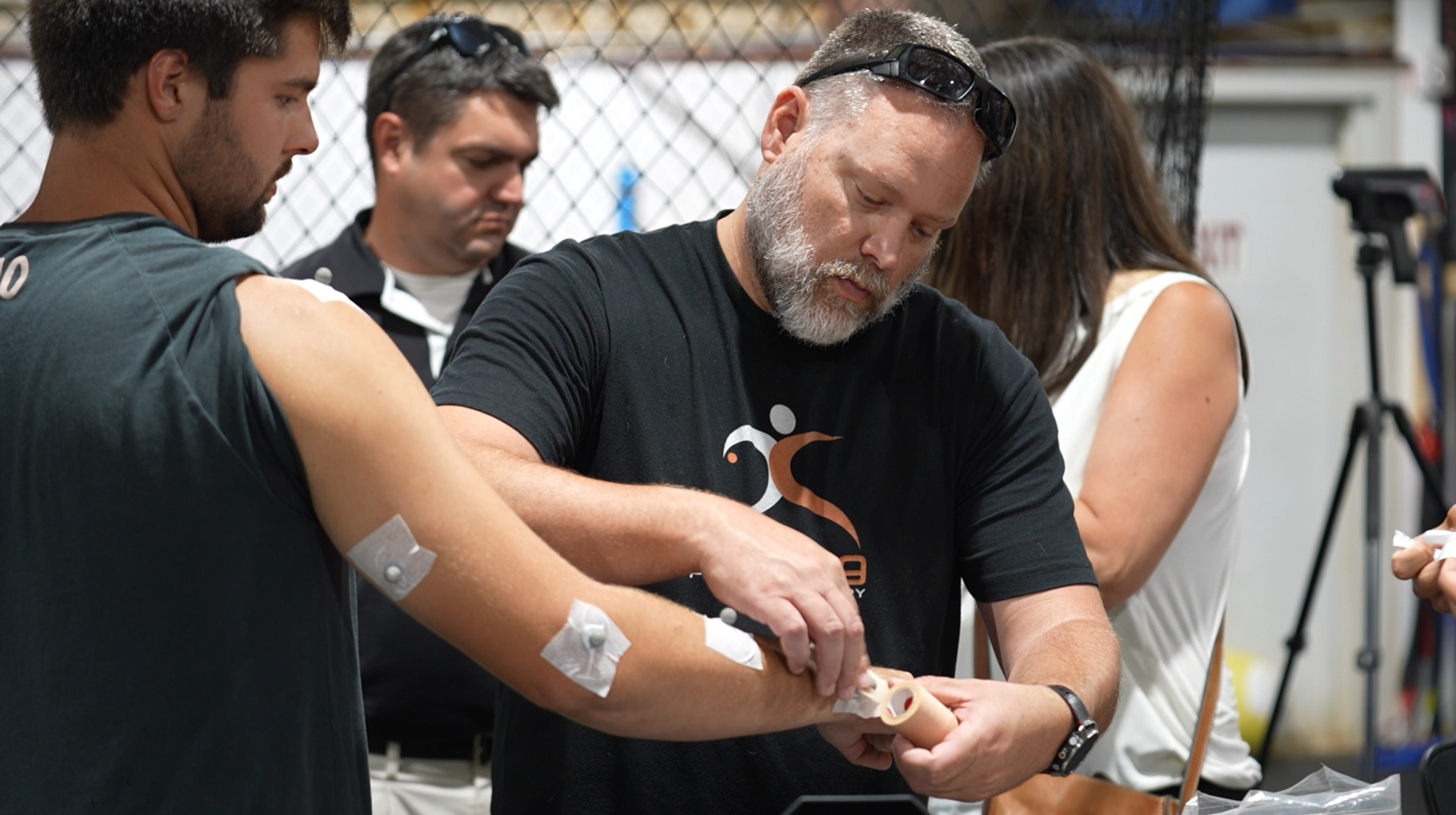 A SLAP tear is a specific injury to the top (superior) part of the labrum, which acts as a fibrocartilaginous rim that deepens the glenoid socket. This structure provides essential stability to the shoulder joint, and when it is compromised, the mechanics of the entire upper extremity are altered.
This often leads to decreased power and an increased risk of secondary injury. Because the long head of the biceps tendon attaches directly to the top of the labrum, repetitive pulling—common in pitching or heavy lifting—can cause the labrum to peel away from the bone. This instability often manifests as a clicking or popping sensation, deep shoulder pain, or a noticeable loss of velocity in overhead athletes.
Phase 1: Building a Bulletproof Shoulder
The best way to manage a SLAP tear is to prevent one from occurring in the first place. This phase focuses on proactive stability, ensuring your rotator cuff and shoulder blade muscles are strong enough to shield the labrum from high-impact forces.
External and Internal Rotation
To start, you can use a resistance band to perform internal and external rotations. Attach a resistance band at waist level to a stable post or doorknob and stand sideways next to it. Keep your elbow tucked firmly against your side at a 90-degree angle, acting like a hinge on a gate.
- For external rotation, stand with your uninjured arm next to the anchor and pull the band away from your body.
- For internal rotation, stand with your uninjured arm away from the anchor and pull the band toward your belly.
We recommend 2 sets of 20 repetitions to build the endurance your shoulder needs for long games or heavy training sessions.
Lateral Raises and Full Can Exercises
You should also integrate lateral raises and “full can” exercises. Stand with your arms at your side and your thumbs facing forward.
- For lateral raises, lift your arms straight out to the side until they reach shoulder height, then slowly lower them.
- For the “full can” exercise, raise your arms forward at a slight 30-degree outward angle to shoulder level.
These movements, done for 2 sets of 12 reps, strengthen the deltoid and supraspinatus while keeping the humerus in a safe, neutral position.
Prone Scapular Strengthening
To finish your preventative routine, perform prone scapular strengthening (T’s, Y’s, and U’s). Lay face down on a bed or table with your arm hanging towards the floor.
- To perform “T’s,” raise your arm straight out to the side with your thumb facing forward.
- For “Y’s,” raise the arm slightly forward so it aligns with your forehead.
- For “U’s,” lift your elbow to shoulder height at a 90-degree angle and rotate your hand upward toward the ceiling.
Hold for 1–2 seconds at the top of each movement and complete 2 sets of 10–12 repetitions. These SLAP tear exercises ensure your shoulder blade provides a synchronized, stable foundation for every movement you make.
Phase 2: The Power of Pre-Hab
If you are currently managing a SLAP tear, we often recommend three to six months of non-surgical treatment to see if the joint can be stabilized conservatively. If surgery is ultimately required, this prehabilitation (pre-hab) phase ensures you enter the operating room with optimal mobility and strength, which significantly accelerates your post-operative recovery.
Cross-Body Stretch
A critical component here is the cross-body stretch. Tightness in the back of the shoulder is a common culprit in overhead injuries. Lie on your side with your injured arm on top. Gently pull your injured elbow across your body toward the floor. Holding this for 30 seconds (repeated 3 times) is often more effective than the traditional sleeper stretch because it improves range of motion without pinching the front of the joint.
Sidelying Shoulder Flexion
To maintain strength without aggravating the tear, we utilize sidelying shoulder flexion. Lay on your side with your injured shoulder upward. Hold a light dumbbell (1-2 pounds to start) with your palm facing your thigh, then lift your arm approximately 45 degrees up towards your head. Make sure to keep your arm parallel to the floor the entire time. Slowly lower the weight back to your thigh and repeat for 3 sets of 10–20 repetitions.
External Rotation Diagonal
Finally, the external rotation diagonal is a fantastic way to bridge the gap toward functional movement. Stand with a resistance band anchored at knee or waist level and start with your hand at your opposite hip. Move your arm upward and across your body—similar to the “cocking” phase of a throw. Complete 3 sets of 12–20 repetitions. This SLAP tear exercise integrates the rotator cuff and lower trapezius for superior joint control.
Phase 3: A Strategic Comeback
Recovering from a SLAP tear repair is a disciplined process. In the initial weeks, the priority shifts from building power to protecting the surgical site while gently restoring movement. Because early mobilization must be precisely controlled to protect the surgical repair, it is vital to work directly with a physical therapist; do not attempt any exercises without consulting them first to ensure your safety and recovery.
Codman’s Pendulum Exercises
Begin your recovery journey with codman’s pendulum exercises. Lean forward at the waist and support yourself with your uninvolved hand on a table. Let your surgical arm hang freely and use your body’s momentum to swing the arm in small, clockwise and counter-clockwise circles. Perform 10 circles clockwise and 10 circles counterclockwise. This helps promote circulation and prevent stiffness without forcing the muscles to contract.
Assisted Forward Elevation and External Rotation
As you progress, you will begin assisted forward elevation and external rotation. Lay on your back to stabilize your shoulder blade, then clasp your hands together, using your healthy arm to support your injured arm.
- For assisted forward elevation, keep your elbows as straight as possible and slowly list your arms up towards the ceiling, then back toward the wall behind your head. Hold for 10–20 seconds.
- For assisted external rotation, bend your arm at a 90-degree angle and hold a stick (cane, yardstick, or PVC pipe) between both hands. Use your healthy arm to push the stick toward your injured side, rotating your forearm away from the body while your elbow stays pinned to your side. Hold for 10 seconds.
These assisted movements help restore range of motion while respecting the healing tissues, but you should always respect the specific range-of-motion limits set by your surgeon.
Shoulder Isometrics
To keep the muscles awake while movement is still restricted, we use shoulder isometrics. Stand in a doorway or at the corner of a wall. With your elbow bent at 90 degrees, press the palm of your hand (internal rotation) or the back of your hand (external rotation) into the wall. Hold the pressure for five seconds without actually moving the arm and perform 10 repetitions, holding each for 5 seconds.
These SLAP tear exercises help you maintain neuromuscular activation and prevent muscle loss, creating the necessary foundation for when you are cleared to begin active lifting again.
Specialized Care for SLAP Tear Recovery
Recovery from a SLAP tear isn’t about a generic protocol; it’s about understanding the chain of movement from the ground up. While the SLAP tear exercises outlined above provide an excellent foundation for your home program, professional guidance ensures that every movement is performed with the precision necessary to protect your joint.
We don’t just get you back to daily life—we get you back to the mound, the weight room, and the field with more confidence than before. By integrating SLAP tear exercises into a comprehensive, personalized treatment plan, we can address the root cause of your injury and prevent future setbacks. If you’re currently dealing with shoulder pain or preparing for an upcoming surgery, contact us to schedule a consultation with our shoulder specialists today to start your strategic path to recovery.