
Tommy John Recovery: A Strategic Path Back to the Mound
The ulnar collateral ligament (UCL) is the primary stabilizer of the medial elbow, particularly during the high-velocity torque of a baseball pitch. When this ligament fails, the path back to the field—Tommy John surgery (UCL reconstruction)—is a meticulous journey.
At BYoung Physical Therapy, we don’t just guide you through a list of exercises; we manage the biological and biomechanical reconstruction of your throwing motion. Our physical therapists are specifically trained to evaluate and correct throwing mechanics to reduce stress on the arm and elbow. This specialized, one-on-one care provides the framework for a successful Tommy John recovery, strategically turning a tendon transfer into a high-performance ligament.
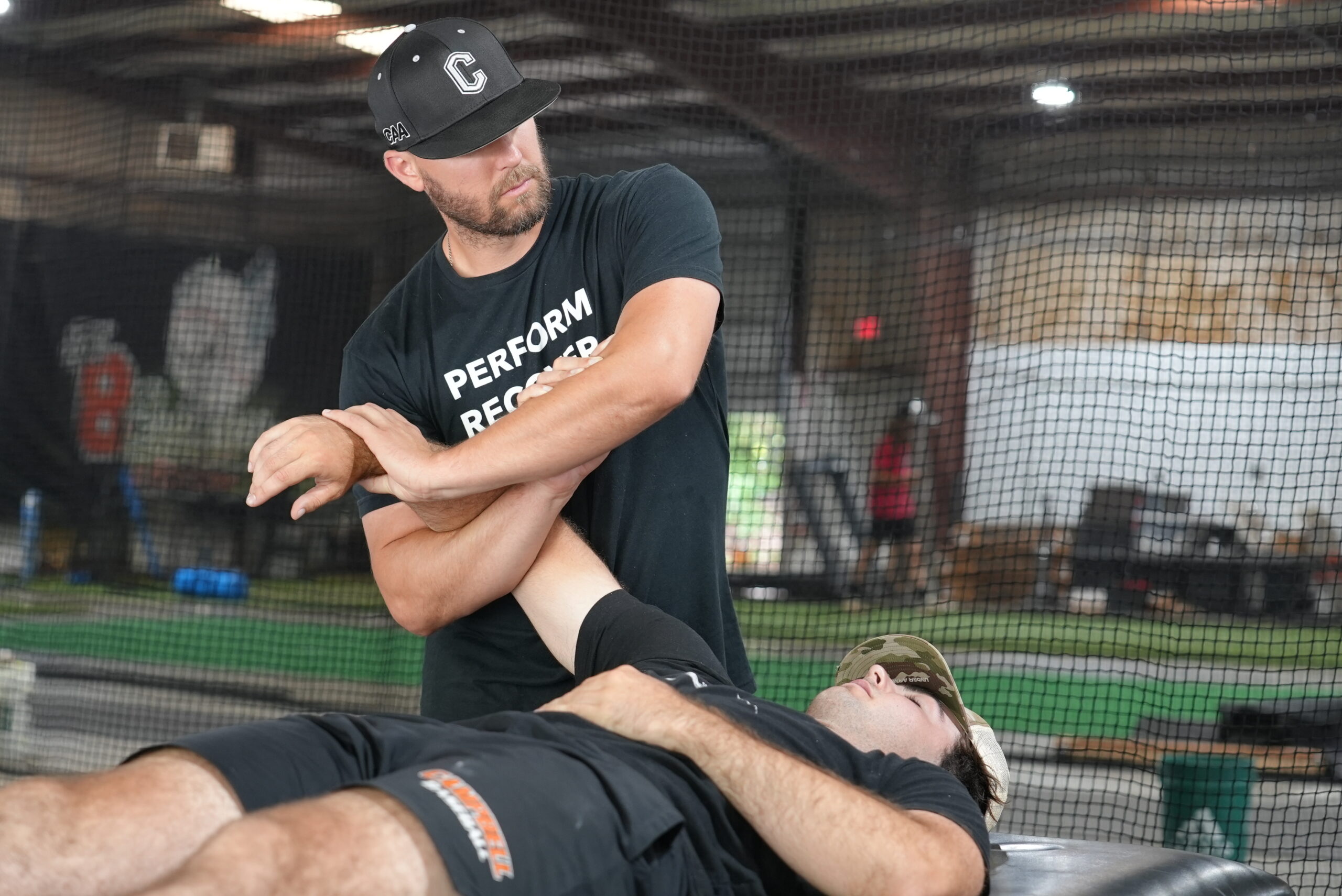
Understanding the Procedure: The Biological “Why”
Tommy John surgery is a tendon transfer procedure. A graft—typically harvested from the forearm, hamstring, or a donor—is threaded through holes drilled into the arm bones to create a new stabilizer. Because no muscles are cut during the surgery, the initial stages of Tommy John recovery can feel deceptively fast. However, your body requires significant time to establish a blood supply to the new tissue.
The focus of our rehabilitation program is to provide gradually increasing stresses on the transferred material. This allows the tendon to adapt its cellular structure and assume the role of a ligament, a process that takes a full year to complete.
The Kinetic Chain: More Than Just an Elbow
A common mistake in rehab is focusing solely on the elbow. That’s why we analyze the scapulothoracic and glenohumeral joints alongside elbow function. During Tommy John recovery, athletes often develop compensatory dysfunction—they protect the elbow by overusing the shoulder or losing trunk rotation. Our program integrates total body conditioning to ensure that when you return to the mound, your legs and core are providing the power, so your elbow doesn’t have to.
Strategic Recovery Timeline
A successful return to sport typically spans 9 to 12 months. We focus on the entire kinetic chain, ensuring that the shoulder girdle and core are ready to support the elbow once throwing resumes.
Your Return to the Mound Starts Here
Tommy John recovery is a marathon, not a sprint. It is a highly technical process that requires more than just hitting your reps—it requires a deep understanding of how the elbow interacts with the rest of your body.
At BYoung Physical Therapy, our goal isn’t just to get you back to your pre-injury state; it’s to build a more resilient, mechanically sound athlete. By combining evidence-based clinical protocols with a sophisticated understanding of the pitcher’s mindset, we ensure that every phase of your rehab is strategic and focused on long-term health.
Don’t leave your recovery to chance—trust the experts who understand the mechanics of the game and the science of the graft. Contact us to learn how we can help you map out a strategic Tommy John recovery plan.
Success Stories
Looking to rehab or up your game, look no further. This place is amazing! From the admin staff up front who are always super helpful and extremely pleasant when scheduling appointments or making last minute changes to the PT staff who work hard to make you better and stronger. I’ve worked with Doug and Rip on rehabbing both my shoulders after major rotator cuff surgery and these guys make going to PT fun. I always look forward to my PT sessions at B Young. Love this place!
Analysis and performance work that is individualized for you that actually works. Amazing environment and even better people.
Brandon Young has been my physical therapist for over 12 years now. He helped me recover through both of my Fulkerson’s knee surgeries. I’ve traveled between their multiple locations to see Brandon and his staff because they are just that good. They go above and beyond to ensure their patients leave the practice healthier and stronger than they came. They’re personable, considerate, and attentive to the individual needs of their patients.
The new Wake Forest location is top notch. The equipment is state of the art and caters to a wide variety of rehabilitation needs. You can’t go wrong choosing Brandon Young and his team for your recovery journey. They’ll be with you every step of the way.
The best experience ever! Feel very comfortable putting my rehab experience in their hands!
Big league atmosphere!!!