
 When an overhead athlete feels a sharp pinch or a deep ache in their shoulder during the acceleration phase of a throw, the immediate instinct is to blame the joint itself. However, clinical biomechanics reveal a different reality: the shoulder is often the victim of a breakdown elsewhere in the body. If your hips or mid-back are stiff, your shoulder is forced to overcompensate to generate power—and that is a precise recipe for structural failure.
To achieve lasting throwing longevity and performance, recovery cannot be limited to the localized site of pain. That’s why our specialized PT for shoulders in Raleigh, Cary, Wake Forest, and Apex involves a systematic approach that looks beyond the painful joint to analyze the entire kinetic chain.
The Clinical Reality: Energy Starts at the Ground
Energy generation in an overhead movement begins at the ground. The body utilizes a sequence of body segments—collectively known as the kinetic chain—to transfer force from the lower extremities, through the core, and out through the fingertips.
When you throw, the lower body acts as the engine. A lack of lead-leg hip internal rotation or poor trail-leg stability limits the pelvis’s ability to drive forward efficiently. If the hips cannot properly rotate and transfer this ground reaction force, a mechanical leak occurs.
Because the laws of physics require a specific amount of force to move a ball at high velocity, the upper extremity must make up for whatever the lower body fails to generate. When the lower engine stalls, the shoulder is forced to work overtime, leading to premature fatigue and microtrauma.
Thoracic Spine Restriction and the Cost of Arm Lag
The thoracic spine (mid-back) is anatomically designed to handle rotational forces. When this section of the spine is restricted or stiff, the torso cannot rotate efficiently during the late cocking and early acceleration phases of a throw.
To maintain ball velocity despite a stiff mid-back, the athlete is forced to over-rotate through the lower back or lag the throwing arm behind the body. This mechanical compensation places extreme, repetitive eccentric stress on the rotator cuff and the anterior joint capsule.
Over time, this excessive stretching and pulling can lead to:
- Rotator cuff tendinopathy or fraying
- Labral strain (including SLAP tears)
- Anterior shoulder instability
Seeking generic stretching protocols won’t resolve this issue. True resolution requires targeted PT for shoulders to restore mobility to the thoracic spine, safely relieving the mechanical overload on the glenohumeral joint.
Redefining the Standard of Care Through Movement Mapping
Treating an overhead athlete by simply icing the shoulder or strengthening the rotator cuff in isolation ignores the root cause of the injury. Long-term athletic health requires a comprehensive movement mapping process that evaluates how your entire body moves in synergy.
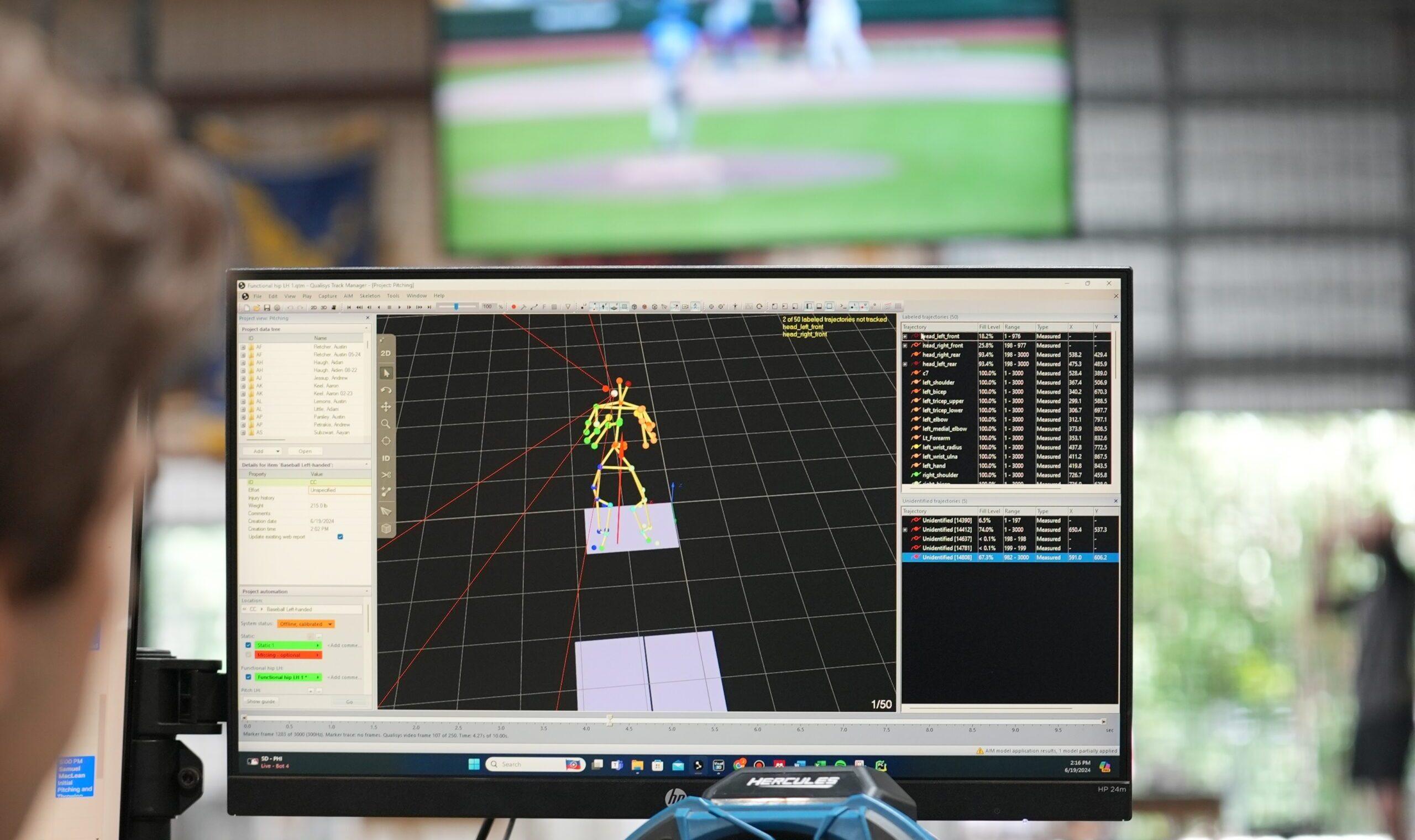
Our Doctors of Physical Therapy utilize high-speed video analysis to catch subtle mechanical faults in your throwing motion that the human eye misses. We pair this diagnostic precision with specialized clinical interventions:
- Dry Needling Therapy: quickly desensitizes overactive tissue and unlocks restricted thoracic spine or hip mobility
- Targeted Manual Therapy: restores passive range of motion in the joint capsule
- Progressive Variable Loading: builds dynamic hip stability and eccentric shoulder strength, ensuring your body can handle the deceleration forces of a throw
By systematically addressing each link in the kinetic chain, we build a structured, evidence-based roadmap that transitions you from pain back to peak performance.
Elevate Your Recovery Strategy
Your body does not move in isolation, and your physical therapy shouldn’t either. If you are experiencing shoulder discomfort during training or competitive play, a generic exercise template will not fix a fundamental mechanical fault. Your throwing longevity depends on a strategic, step-by-step approach that targets your unique biomechanics from the ground up.
If you are ready to experience specialized PT for shoulders in Raleigh, Cary, Wake Forest, or Apex, reach out today to schedule your comprehensive, one-on-one evaluation and get started on your path to sustainable performance.