 When an athlete or active adult in the Triangle area suffers an injury, the primary goal is simple: return to high-level performance as safely and efficiently as possible. However, the path taken to reach that goal varies dramatically depending on the structure of your care.
In many high-volume clinics, care relies on standardized protocols and pre-printed exercise sheets. While these generic routines might provide baseline movement for the average population, they fall short for individuals who place high demands on their bodies. High-quality physical therapy services in the greater Raleigh area must go beyond generalized routines. Achieving lasting recovery, preventing re-injury, and optimizing performance requires a shift away from generic exercise templates toward specialized, one-on-one biomechanical assessments.
The Limitation of Generic Exercise Templates
Generic exercise templates are designed around a diagnosis, not an individual. If three different athletes present with anterior shoulder pain, a template-based approach typically assigns all three the exact same set of rotator cuff bands and general stretches.
The fundamental flaw in this approach is that a medical diagnosis describes what tissue is irritated, but it reveals nothing about why it became overloaded in the first place.
- Ignoring Individual Biomechanics: A template assumes every shoulder, hip, or knee joint operates with identical lever arms, joint congruence, and neuromuscular control.
- Treating Symptoms, Not Root Causes: Standardized protocols address localized inflammation while missing remote mechanical failures, such as a stiff thoracic spine or poor internal rotation of the hip.
- Lack of Progressive Overload Control: Generic exercises rarely account for the specific force, speed, and load requirements needed for an athlete to safely return to their sport.
When clinics rely on standardized sheets, care becomes passive. Athletes end up performing low-level exercises that fail to build the necessary capacity required for dynamic movement, overhead throwing, or heavy resistance training.
The Clinical Value of One-on-One Biomechanical Assessments
High-quality physical therapy services begin with an exhaustive, one-on-one evaluation conducted by a Doctor of Physical Therapy. Rather than looking at an isolated joint, a specialized biomechanical assessment evaluates the kinetic chain from the ground up.
In sports like baseball, track and field, or functional fitness, power and stability flow through a sequence of connected segments. A break anywhere in that chain forces downstream joints to overcompensate.
During a specialized biomechanical assessment, we evaluate key performance markers:
- Joint Kinematics and Mobility: measuring precise active and passive ranges of motion to identify structural or soft-tissue restrictions
- Force Production and Symmetry: utilizing objective strength testing to detect force deficits between limb drive and stabilization muscles
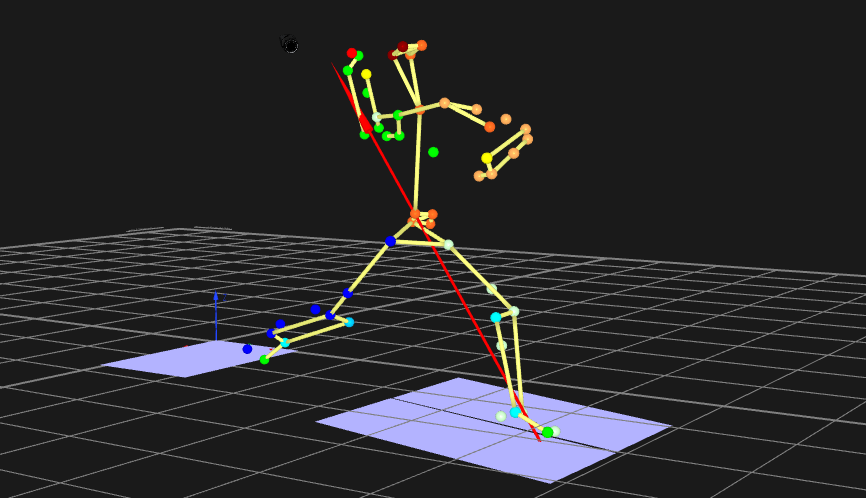
- Dynamic Movement Mechanics: analyzing sport-specific patterns—such as throwing mechanics or squat depth—using high-speed video analysis to capture mechanical flaws in real time
By evaluating how your entire body moves under load, we pinpoint the exact mechanical breakdown causing stress on the injured area.
Translating Data into Individualized Treatment
The data gathered during an individual evaluation dictates the entire structure of your rehabilitation. Specialized physical therapy services build a targeted strategy around your specific movement faults rather than forcing your body into a rigid protocol.
If a pitcher presents with medial elbow pain, a generic template might focus strictly on wrist flexor curls and forearm stretches. A detailed biomechanical evaluation, however, often reveals that the elbow is taking on excessive valgus torque because the athlete lacks lead-leg hip stability and thoracic rotation during the late cocking phase of their throw.
Your treatment plan is built around how your body moves—and how we can help it move better. Specialized care integrates targeted interventions to fix these underlying faults:
- Targeted Soft-Tissue Interventions: utilizing advanced techniques like dry needling therapy to quickly reduce local pain and desensitize hypertonic tissue, opening a window for neuromuscular re-education
- Specific Mechanical Adjustments: prescribing exercises that directly correct scapular dyskinesis, hip mobility deficits, or core instabilities identified during testing
- Systematic Load Progression: structuring a progressive loading protocol that systematically restores the tissue’s ability to handle high-velocity and high-force demands
This level of individualized programming transforms rehabilitation from a passive waiting game into a strategic, performance-driven recovery process.
Precision Motion Over Standard Protocols
Recovery isn’t guesswork; it’s a strategic, step-by-step process designed to get you back to what you love. By grounding your treatment in objective biomechanical data, specialized physical therapy services ensure your transition from rehabilitation back to competition is seamless and safe.
If you are dealing with persistent pain or recovering from an injury, settling for generalized care will only delay your return to performance. You deserve a clear, evidence-based plan tailored specifically to your body and your sport.
At BYoung Physical Therapy, we deliver comprehensive physical therapy services in the greater Raleigh area designed to resolve the root cause of your pain. Contact us today to schedule your one-on-one biomechanical evaluation and take the first step toward a complete recovery.